
Best Brokers for Trading Options 2026


Index
It is undeniable that financial options are a booming asset among speculators and investors. Whether due to their versatility as a hedging asset, the leverage capacity they grant the operator, or the versatility in creating strategies, the demand for this instrument as an operational vehicle is increasing.

Precisely for this reason, in this article we are going to review which are the best options brokers, as well as what you should consider when selecting an options broker.
What are financial options?
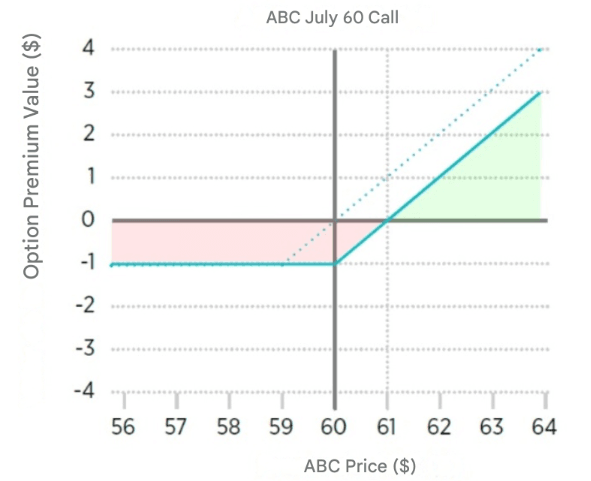
Financial options are contracts that give the buyer the right to buy or sell an asset at a specific price on a future date. The buyer of a call option has the right to buy the asset at that price, while the buyer of a put option has the right to sell the asset at that price. The seller of an option is known as a writer and is obligated to buy or sell the asset if the buyer decides to exercise their option. Options are often used as a way to hedge risk or to gain speculative profits.
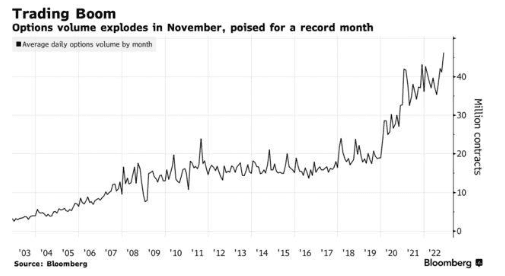
We can see in this Bloomberg chart how options trading is skyrocketing, and how records are being broken for the last 25 years.
It is very striking that with the appearance of daily expirations in options on $SPX, $SPY, and $XSP, trading in these skyrockets, and especially the vast majority of open contracts have less than 24 hours until their expiration:
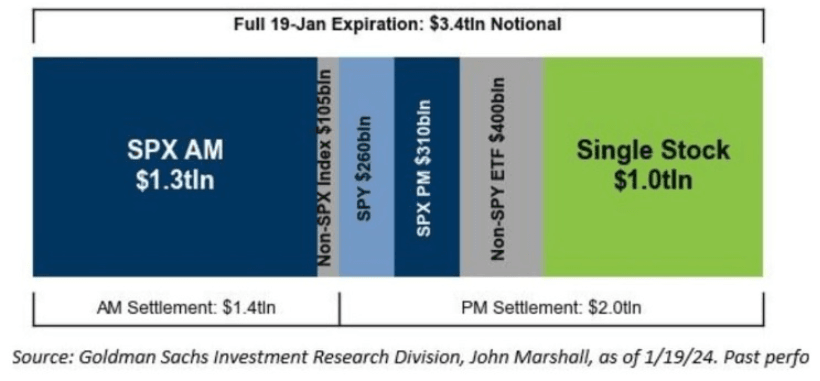
This revolution necessitates a review of which intermediaries can respond to an increasingly specific and characteristic demand in the most optimal way possible, and of course, at the lowest cost.
Brokers for trading options in 2026
There are few brokers that offer genuine, complete access to exchange-traded financial options for UK investors. Many platforms marketed as "options brokers" only offer OTC derivatives — contracts between you and the broker, not traded on a regulated exchange — which carry counterparty risk and lack the liquidity of real listed options.
The four brokers below all provide access to real, exchange-traded options on regulated venues including CBOE, CME, EUREX, and others. Each is regulated by a Tier-1 authority and offers the tools a serious options trader needs: full options chains, live Greeks, multi-leg order entry, and direct market access.
Interactive Brokers
Interactive Brokers is the benchmark for professional options trading globally. It offers access to over 34 options exchanges — practically every market of interest to a UK-based options trader — with some of the most competitive fees available and a platform purpose-built for derivatives.

The Trader WorkStation (TWS) platform includes the Option Strategy Lab, Probability Lab, and full Greeks display in real-time across the entire options chain. Multi-leg strategies — spreads, strangles, condors — are natively supported with a single order ticket. The platform also connects with external tools such as TradingView and supports API trading for algorithmic strategies.
- Regulation: FCA (UK), CBI (Ireland for EU clients), regulated in 10+ jurisdictions.
- Markets: 34+ options exchanges — CBOE, CME, EUREX, MEFF, Hong Kong, ASX, and more.
- Commissions (fixed pricing): $0.65/contract for US options; tiered pricing starts from $0.25/contract for high-volume traders. Minimum $1.00 per order.
- Platform: Trader WorkStation (TWS), IBKR Mobile, Client Portal.
- Broker profile: Intermediate to professional traders.
| Pros of Interactive Brokers | Cons of Interactive Brokers |
| ✅ Access to 34+ options exchanges — the widest market coverage available to UK traders. | ❌ TWS has a steep learning curve; not suitable for complete beginners. |
| ✅ Best-in-class options analytics: Option Strategy Lab, Probability Lab, live Greeks. | ❌ The platform can feel overwhelming initially due to its depth of features. |
| ✅ Competitive fees from $0.25–$0.65/contract; tiered pricing rewards volume. | |
| ✅ Full multi-leg order entry for spreads, condors, strangles, and complex strategies. | |
| ✅ Low margin rates; API trading supported for automated strategies. |
If you are interested in this broker and want to know more, read our Interactive Brokers review.
tastytrade
tastytrade is the platform built from the ground up specifically for options traders. Founded by the team behind thinkorswim, it is consistently ranked as the best dedicated options platform in 2026 by multiple independent reviews. Where other brokers treat options as one product among many, tastytrade has built every feature around the options workflow: from the options chain design to position management to the Greek summaries.
Its pricing model is uniquely trader-friendly: $1 to open, $0 to close per contract (capped at $10 per leg), which effectively works out to $0.50 per contract round-trip — cheaper than the industry-standard $0.65/contract used by most competitors. UK residents can open a Schwab One International or tastytrade account to access US options markets.
- Regulation: NFA/CFTC (US); FSCS-equivalent protection via SEC/SIPC for securities.
- Markets: US options markets — stock options, index options (SPX, NDX, RUT), ETF options (SPY, QQQ, IWM). 0DTE (daily expiry) options fully supported.
- Commissions: $1.00 to open / $0.00 to close per contract (max $10/leg). Index options (SPX, XSP): $0.65/contract.
- Platform: tastytrade desktop (Windows/Mac), mobile app, web.
- Broker profile: Options-focused traders, from active retail to professional.
| Pros of tastytrade | Cons of tastytrade |
| ✅ Best dedicated options platform in 2026 — designed entirely around options workflows. | ❌ US markets only — no access to European exchanges (EUREX, MEFF, LSE). |
| ✅ Industry-leading pricing: $1 open / $0 close per contract (effective $0.50 round-trip). | ❌ Platform is advanced — beginners can accidentally access complex strategies. |
| ✅ Full support for 0DTE options on SPX, SPY, QQQ — the fastest-growing segment of the market. | ❌ Account is USD-denominated; currency conversion required for UK investors. |
| ✅ Exceptional options chain display with live Greeks, P&L curves, and probability analysis. | ❌ Limited research tools beyond options-specific analytics. |
| ✅ tastylive educational content — one of the best options education platforms available. |
Charles Schwab (thinkorswim)
Charles Schwab offers one of the most powerful options trading environments available to UK investors through its international account, with $0 commission on options (no per-contract fee for standard US stock and ETF options) and the legendary thinkorswim platform — widely regarded as the best options analysis tool in the market, originally built by the founders of tastytrade.
UK residents can open a Schwab One International account, which provides full access to US markets, options trading, and the thinkorswim platform. The platform includes one of the most comprehensive options analysis toolkits available: probability of expiry, theoretical price modelling, risk graphs, live Greeks, and the ability to paper trade any strategy before risking real capital.
- Regulation: SEC, FINRA, SIPC (US). UK investors hold account under Schwab International; $500,000 SIPC protection on securities.
- Markets: US options markets — stocks, ETFs, indices, futures options. Access to 30+ international equity markets through Global Account.
- Commissions: $0 per options contract (no commission); exchange and regulatory fees still apply. Broker-assisted trades: $25 service fee.
- Platform: thinkorswim (desktop, web, mobile) — the gold standard for options analysis.
- Broker profile: All levels — beginners benefit from paper trading; professionals from thinkorswim's depth.
| Pros of Charles Schwab | Cons of Charles Schwab |
| ✅ $0 commissions on options — no per-contract fee on US stock and ETF options. | ❌ Account is USD-denominated; currency conversion costs apply for UK investors. |
| ✅ thinkorswim is the industry's most powerful options analysis platform. | ❌ US-focused — limited to US options markets; no EUREX or European exchange access. |
| ✅ Full paper trading (simulated) environment — ideal for testing strategies risk-free. | ❌ Opening a Schwab International account has more administrative steps than UK-based brokers. |
| ✅ Outstanding research and educational resources; $500,000 SIPC protection. | |
| ✅ No account minimum, no inactivity fee. |
Saxo Bank
Saxo Bank is the standout choice for UK investors who want to trade exchange-traded options on European markets as well as US markets — all from a single FCA-regulated UK account. It is the only broker on this list where you can trade real, listed options on the LSE, EUREX, and CBOE simultaneously without needing a foreign account.
Saxo provides Direct Market Access (DMA) to 26 options exchanges including CBOE, CME, EUREX, and LSE, meaning you trade directly into the exchange order book — not against the broker's own book. The platform offers two interfaces: SaxoTraderGO (web and mobile, suitable for most traders) and SaxoTraderPRO (downloadable desktop for advanced traders), both with full options chains, live Greeks, and multi-leg order entry.
Saxo also integrates with ProRealTime for advanced charting and options strategy analysis, which many professional traders regard as the best European charting platform available.

- Regulation: FCA (UK, licence 551422), Danish FSA, FINMA (Switzerland), ASIC (Australia) — licensed investment bank since 1992.
- Markets: 26 options exchanges with DMA — CBOE, CME, EUREX, LSE (FTSE 100 options), MEFF, OMX, and more. 71,000+ total instruments.
- Commissions (Classic account): From $1.25/contract on FTSE 250 and NASDAQ stocks; $3/contract on other exchanges. Lower rates at Platinum and VIP tiers.
- Platform: SaxoTraderGO (web/mobile), SaxoTraderPRO (desktop), ProRealTime integration.
- Broker profile: Intermediate to professional traders; strong fit for European options exposure.
| Pros of Saxo Bank | Cons of Saxo Bank |
| ✅ The only FCA-regulated UK broker offering DMA exchange-traded options across 26 global exchanges. | ❌ Fees on Classic account are higher than IBKR for high-volume traders. |
| ✅ Access to EUREX and LSE options — essential for traders who want European market exposure. | ❌ Inactivity fee applies if account is dormant — check current terms. |
| ✅ Full GBP account; protected up to £120,000 under FSCS. | ❌ Platform complexity can be daunting for beginners. |
| ✅ SaxoTraderPRO + ProRealTime integration — institutional-grade tools for serious derivatives traders. | |
| ✅ Danish investment bank since 1992 — one of the most financially robust brokers available. |
If you are interested in this broker and want to know more, read our Saxo Bank review.
What options markets can be traded from the UK?
- LSE (London Stock Exchange): The UK's premier exchange offers derivatives products including FTSE 100 options. The LSE is regulated by the Financial Conduct Authority (FCA), ensuring a high level of investor protection for traders based in the UK. Additionally, being mindful of the London Stock Exchange hours is crucial for traders, as these hours define when the market is open for trading and can influence the execution and pricing of options.
- CME (Chicago Mercantile Exchange): The world's largest financial derivatives exchange, offering options on major indices (S&P 500, NASDAQ, Russell), currencies, energies, agricultural products, metals, interest rates, and crypto. The platform for these products is CME Globex.
- CBOE (Chicago Board Options Exchange): Home to the most liquid index options in the world — SPX (S&P 500), VIX, XSP, and more. The CBOE pioneered 0DTE (daily expiry) options, which now account for the majority of index options volume.
- EUREX: Europe's leading derivatives exchange, with the DAX options and EuroStoxx 50 options as its flagship contracts. One of the largest markets in the world for index and equity options.
- Other markets: ASX (Australia), ICE, MEFF (Spain), OMX (Nordics), HKEX (Hong Kong).
What criteria should a good options broker meet?
There are several factors to consider when evaluating a financial options broker:
Regulation and security
When we talk about financial options, we're referring to complex derivatives that often carry a high degree of uncertainty—particularly for less experienced investors.
For this reason, it's essential to ensure that your options broker is regulated by a reputable financial authority. For UK traders, FCA regulation is the gold standard — it ensures client money is held in segregated accounts, FSCS protection applies (up to £85,000 or £120,000 depending on the broker), and the broker is subject to strict financial reporting requirements.
There is an important distinction to understand: exchange-traded options (listed on CBOE, CME, EUREX, etc.) are fundamentally different from OTC options (traded directly between you and a broker or market maker). Exchange-traded options offer standardised contracts, transparent pricing, and central clearing — making them far safer and more liquid. Always confirm your broker offers genuine DMA or exchange-traded access, not just OTC derivatives.
Trading Platform
Options trading demands more from a platform than standard stock trading. What really matters is that the best trading platform provides a full set of options-specific tools.
Your platform must include live access to the Greeks. As you may already know, the Greeks are a set of metrics used to measure how sensitive an option is to various market factors:
- Delta: measures how sensitive an option's price is to changes in the price of the underlying asset.
- Gamma: measures how sensitive the delta is to movements in the underlying asset's price.
- Vega: measures how sensitive an option's price is to changes in implied volatility.
- Theta: measures how much an option's price declines as time passes — critical for managing time decay in 0DTE and short-expiry strategies.
- Rho: measures how sensitive an option's price is to changes in interest rates.
Beyond Greeks, a serious options platform should offer: a full options chain showing all strikes and expiries; P&L risk graphs for multi-leg positions; implied volatility charts; and multi-leg order entry to build spreads, condors, and strangles in a single ticket. Interactive Brokers, tastytrade, thinkorswim, and Saxo all meet these requirements.
Range of products and markets
Another important factor is the range of products and markets your broker provides access to. On the one hand, there are the financial instruments themselves — stocks, indices, forex, and commodities. On the other hand, access to global markets is equally vital.
Some of the key markets to look for include:
- Chicago Board Options Exchange (CBOE) — SPX, VIX, XSP
- Chicago Mercantile Exchange (CME) — ES, NQ, CL options on futures
- EUREX — DAX, EuroStoxx 50
- LSE — FTSE 100 options
- Hong Kong Exchange (HKEX)
- Osaka Securities Exchange (OSE)
Commissions and Spreads
Commissions matter in options trading, but they are not the only cost. The bid-ask spread on less liquid options can dwarf the difference in per-contract fees between brokers. For actively traded options — SPX, SPY, QQQ — spreads are typically very tight. For individual equity options or European index options with lower volume, spreads are wider and the quality of your broker's execution becomes more important.
As a benchmark: Interactive Brokers charges $0.25–$0.65/contract; tastytrade $0.50 effective (round-trip); Charles Schwab $0; Saxo from $1.25/contract on active markets. Your priority should be finding a broker that meets all key criteria — and among those, choosing the most cost-effective option for your trading style and volume.
What are the risks of investing in financial options?
Investing in financial options involves several risks, including the following:
- Leverage risk: Options typically involve leverage, allowing investors to control a larger position with a relatively small outlay. While this can amplify returns, it also increases risk — since even a minor movement in the underlying asset's price can result in significant gains or losses.
- Risk of total loss: If the underlying asset does not move in the anticipated direction, the option may expire worthless, resulting in a complete loss of the premium paid.
- Volatility risk: Options prices are highly sensitive to implied volatility. Increased volatility can drive up option premiums, potentially reducing profitability or increasing the likelihood of loss even if your directional view is correct.
- Liquidity risk: Some options may be thinly traded, leading to wide bid-ask spreads and difficulty exiting a position at the desired price. Stick to options with sufficient open interest and daily volume.
- Assignment risk: If you sell (write) options, you can be assigned at any time on American-style contracts. Understand your obligations before writing uncovered options.
Final thoughts
Options trading is a powerful but demanding discipline. The right broker makes a meaningful difference — not just in fees, but in the quality of the tools, the accuracy of the data, and the reliability of execution.
For most UK traders, Interactive Brokers remains the default choice for its unmatched market access and competitive pricing. tastytrade is the best platform if your focus is US options, particularly 0DTE and short-expiry strategies. Charles Schwab's thinkorswim is the gold standard for options analysis and is free to use. And Saxo Bank is the best option for traders who want FCA-regulated access to both European and US listed options from a single UK account.
Overall, it is important that you understand the risks before investing in financial options and ensure that you understand how they work. Precisely for this reason, you must make sure to choose a regulated and reliable broker — and one that offers real, exchange-traded options rather than OTC products.